Requirements, inventories, process records, and decision logs that help organisations keep AI work coordinated, traceable, and easier to keep current.
WHAT IT COVERS
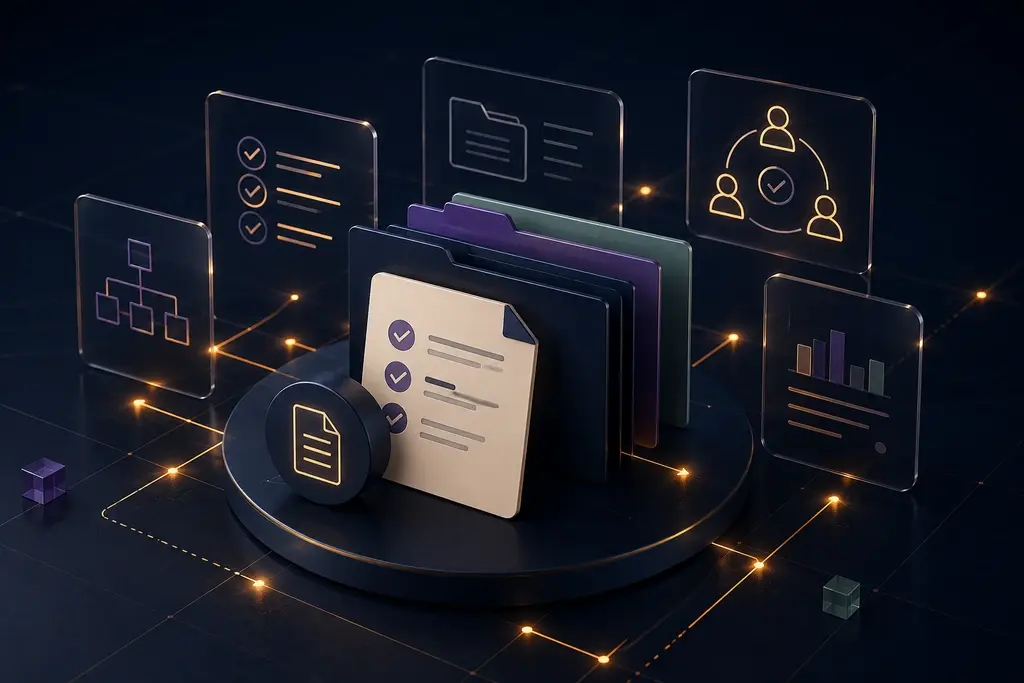
AI documentation brings together the records needed to explain how AI tools and agents are intended to be used, who is involved, how decisions are made, and how processes are reviewed over time. It covers requirements, workflows, inventories, approvals, ownership, and the information needed to keep AI initiatives traceable and usable.
Intended use, objectives, requirements, roles, and responsibilities.
Workflows, procedures, handovers, and human review or approval points.
AI tool and use-case inventories, decision logs, ownership details, and key system information.
Completeness, version control, consistency, and continued usability.
TYPICAL ACTIVITIES
The exact scope depends on the organisation, the AI tools, agents, use cases, connected systems, and documentation needs. Typical activities include:
Requirements and intended-use documentation
AI tool, agent, and use-case inventories
Connected systems, access, and permissions
Ownership and defined roles
Workflow and approval-point documentation
Decision logs and change records
Governance and review documentation
Documentation checks and version control
A GOOD FIT IF
Documentation becomes especially valuable when AI tools, agents, or connected workflows move beyond isolated experiments and organisations need shared records, clear ownership, and repeatable review.
AI tools and use cases are not centrally listed
Intended use, requirements, or ownership are unclear
Information is spread across teams, documents, or vendors
AI tools connect to business systems or can trigger actions
Human review and approval points need to be documented
Decisions, changes, incidents, or exceptions need reliable records
AI initiatives often connect governance, workflows, documentation, and language support. These related services may help where responsibilities, processes, or records overlap.
WAYS TO START
This service can start with a quick review, a focused assessment, a roadmap, or advisory support — depending on what your organisation needs now.
DOCUMENTATION & REQUIREMENTS
A short conversation can help identify which requirements, records, ownership details, and review points need attention and determine the right next step.
